The Bank of Dreams & Nightmares
School Partnership Report  ·  Academic Year 2025–2026
April 2026
Primary Progression Model  ·  Year One

Beaminster
St Mary's

CE Primary School
A pupil holds copies of Undreamed Nightmares at the book launch, October 2025
scroll to read
A note before we begin

This report is written for Darren, Katy, and the whole staff at Beaminster St Mary's — not as a formal account of activity, but as a genuine reflection on what this first year has meant, what we've learned together, and where we're headed next. Thank you for trusting us with your pupils. It has been one of the most rewarding partnerships we've had.

10
Sessions delivered
Sept 2025 – March 2026
67
Pupils reached
Years 3, 4, 5 & 6
4
Year groups
incl. Year 5 from April 2026
Overview

A Pilot That Worked

This year marked the first stage of our Primary Progression Model at Beaminster St Mary's — a structured, sequential approach to creative writing across Key Stage 2, with each year group taking part in a different stage of a four-year journey.

The intention was never just to deliver strong individual workshops. It was to test whether a progressive, layered approach to writing could begin to take shape across a whole school — whether pupils in Year 3 could one day become the Year 6 pupils who hold a published book in their hands and understand, in a way that feels real, that they are writers.

This was the year we found out whether that was possible.

It is.
Year 3  ·  Imagination, Collaboration, Permission

Character Creation
& Storymaking

The Year 3 cohort — Octopus Class — came to us twice this year, and the difference between the two visits was striking.

In November, they invented a shared character: Stu Bart Nitwit — a strange, joyful invention that immediately gave the room permission to stop being sensible. From there, pupils created their own characters before coming together to write a shared story, The Adventure of the Friends, which turned out to involve, among other things, bone-eating ants.

When we came back in March, something had shifted. Our notes describe a class that had "gelled" — more settled, more confident, quicker to engage. When we asked what makes a good story, they didn't reach for the obvious technical answers. They talked about setting, plot, character, dialogue. They were thinking like writers.

Almost every pupil finished a complete story. That matters more than it might sound.

"They appeared more settled, engaged, and confident. When asked what makes a good story, they gave a broad range of answers — setting, plot, character, dialogue — rather than defaulting to basic technical features."

— Creative Learning Manager session notes, March 2026
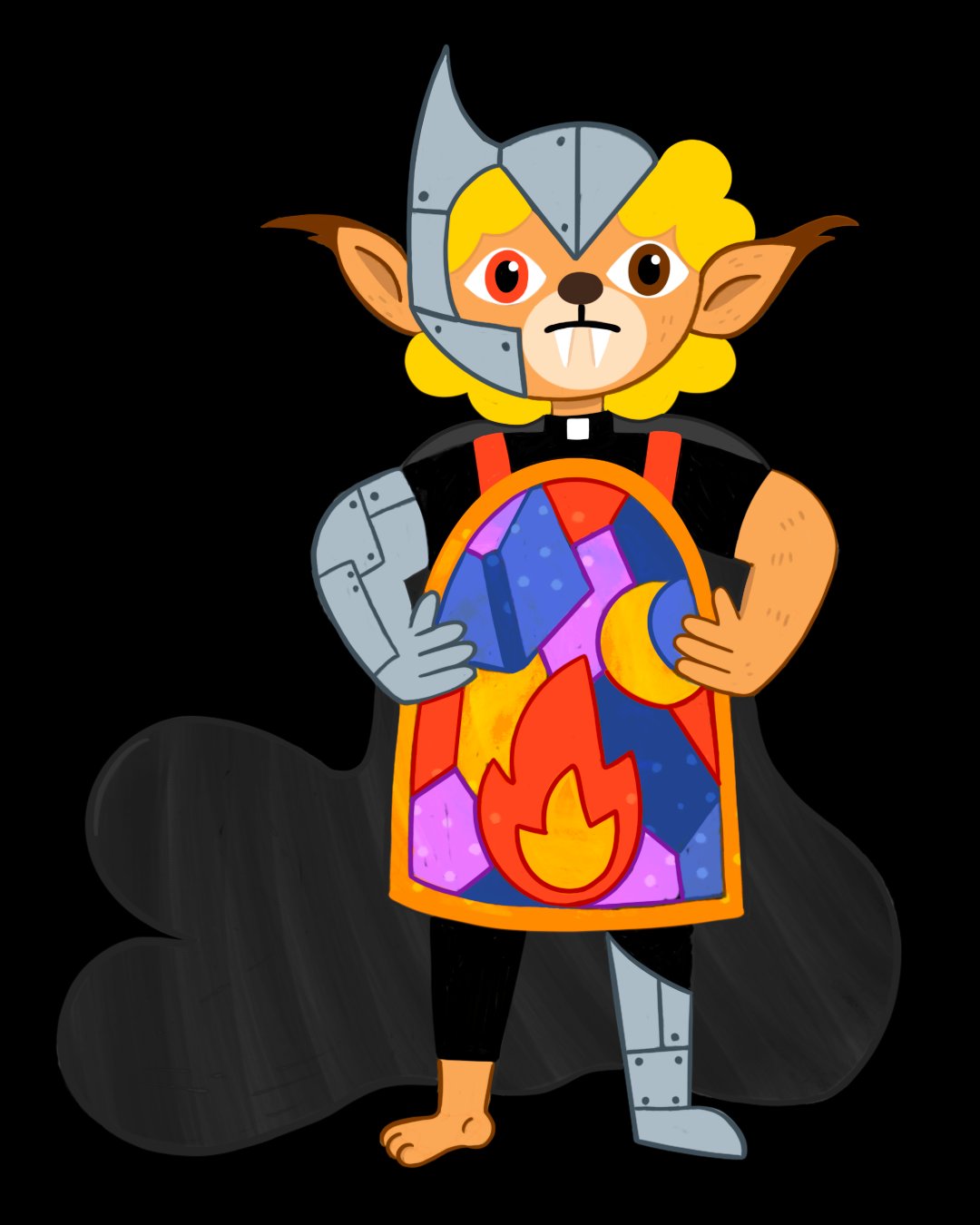
Character creation illustration — a small armoured creature with a shield
Character illustration from the Workshop, November 2025
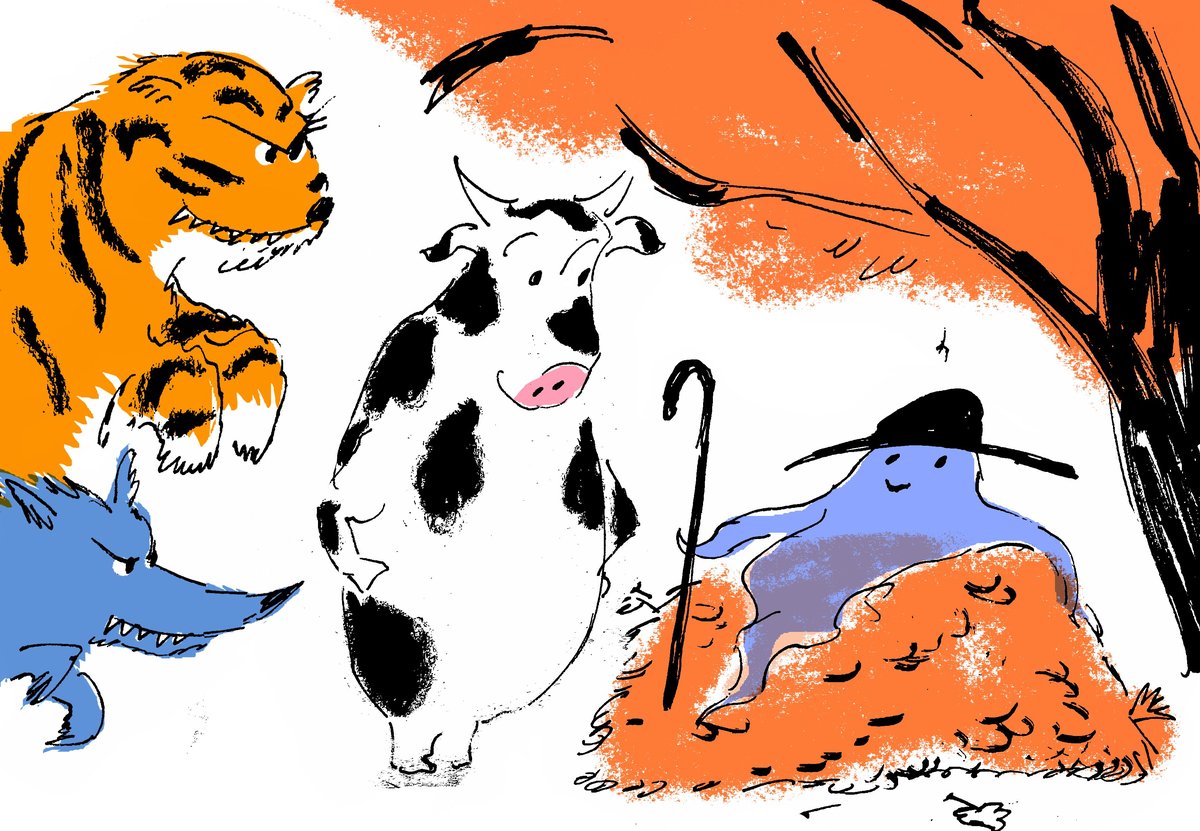
Illustration from the storymaking project — a tiger, cow and ghost in an orange landscape
Illustration from the Year 4 storymaking project
Year 4  ·  Structure, Consequence, Voice

Speechwriting &
Survival Guide

Year 4 worked on something different: writing with purpose and consequence.

In November, pupils campaigned for leadership — persuading, structuring, arguing their case. Many rose to this brilliantly, articulating not just obvious traits but more abstract qualities: emotional strength, responsibility, empathy.

In March, we arrived with a problem. A Bank Manager had made a questionable decision and was now trapped in a tiger enclosure. Their task: write a survival guide that might actually work.

The outcome — A Practical Guide to Surviving Tigers (and Other Poor Decisions) — was as inventive as it was rigorous. Pupils tested whether their words would hold up in the real world.

Writing has consequences. Instructions are actions waiting to happen. Year 4 understood that this year.

Year 5  ·  Connection and Audience

Intergenerational Penpals

Year 5's project is still underway as this report is written, and we're looking forward to sharing a fuller account when it concludes. This stage of the model asks a deceptively simple question: who is writing for?

Writing letters to real people — people outside the classroom, outside school, outside the usual audience — shifts something. The tone changes. There's more care. A clearer sense that someone will actually read this, and that it matters. We'll share a full account once the project completes in May.

Year 6  ·  Authorship and Recognition

Chapbook:
Undreamed Nightmares

Year 6 became published authors.

Their chapbook, Undreamed Nightmares, is a collection of stories rooted not in distant fantasy worlds but in the familiar — ordinary places where something begins to feel not quite right. Forests whisper. Games come alive. Maizefields conceal something otherworldly.

The project culminated in a public book launch, where pupils saw their work in print, held it in their hands, and shared it with an audience. For many of them, this was the first time that shift happened — from writing being something done for school, to writing being something that exists in the world.

Chapbook feedback  ·  n=11
Enjoy workshop 4.7/5
Feel more confident 4.6/5
Want more workshops 5.0/5
Enjoy writing 3.0/5
The 3.0 score reflects the full range of writing confidence in the cohort — including those for whom extended writing is genuinely hard. Those pupils were still there, still engaged, still wanting more.
Pupil Feedback

Across All Workshops

Staff CPD  ·  January 2026

Teachers as Writers

Alongside the pupil work, the whole staff took part in a CPD morning in January. What emerged was not just a list of techniques, but a real creative encounter. Staff feedback described the session as interactive, inspirational and full of practical ideas.

The poem that came out of it — collaboratively written, entirely honest — speaks for itself:

A think-on-your-feeter
A spinning-plater
A classroom-messer
Listening to long, rambling stories…
Professionally. Staying. Calm.

A peace-keeper
A drawing interpreter
Glue-stick stealer
Whiteboard pen hoarder
Coffee consumer
Master or mistress of bladder control

Inspirational Facilitator

A writing culture in a school is not built through pupil workshops alone. It grows when teachers also experience writing as creative, playful and human. That morning was a start. We know the middle section of the CPD needs work — there wasn't enough time for staff to actually try the approaches before sharing back. We'll build that in next time.

Reflections from Year One

What We've Learned

Engagement is genuinely high

Across every year group, pupils want to be in the room and want to come back. That is the foundation everything else is built on.

Oracy is doing serious work

Pupils who can speak their ideas clearly are far more able to write them. The difference in Octopus Class between November and March is the clearest example.

The structure of the model works

Each stage fits the age group, develops a distinct skill, and builds towards the next. What Year 3 did this year is the foundation for what they'll do in Year 4.

Writing confidence is the central challenge

The gap between enjoying the sessions and enjoying writing is not something a single year will close. It is, however, exactly why we're here.

We need to track progress more carefully

We are seeing development between sessions — the difference in Octopus Class between November and March is visible and real. But we're not yet capturing it systematically. That changes next year.

Next Steps  ·  2026–2027

Looking Ahead

Next year is where the model really begins. This year tested the structure. Next year tests what happens when children carry their learning forward — when the Year 3 pupils who invented Stu Bart Nitwit become the Year 4 pupils who have to argue their case in a speech, or write instructions that need to actually work.

01

Cohort progression begins

From September 2026, we follow the same pupils through the model for the first time. Year 3 becomes Year 4. Year 4 becomes Year 5. Year 5 becomes Year 6. A new Year 3 cohort begins the journey.

02

Whole Key Stage 2 delivery continues

We continue to work across all year groups, introducing new Year 3 pupils and maintaining full engagement across the school.

03

Strengthening sequencing and scaffolding

Tighter structure within sessions — stronger modelling, staged drafting, and closer connections between one visit and the next.

04

Deepening the partnership with staff

More co-planning, stronger curriculum alignment, and more time within CPD sessions for teachers to actually write.

05

Beginning to evidence long-term impact

The central question becomes: what happens when pupils experience this work over four years? We will begin to track this properly, for the first time.

What happens when pupils experience this work over four years?We're about to find out.

The Bank of Dreams & Nightmares
April 2026  ·  Bridport, Dorset

Get in touch

Nick Goldsmith
Founder & Director
nick@thebankofdreamsandnightmares.org

Ed Swift
Creative Learning Manager
ed@thebankofdreamsandnightmares.org

www.thebankofdreamsandnightmares.org